
Have you scrolled through social media or read a text thread lately and seen someone accused of “Charizarding”? If you’re not deep into meme culture, this term can be genuinely confusing. It has exploded in use over the last couple of years, moving from niche online forums to everyday digital conversation. Essentially, Charizarding meaning in slang revolves around the idea of showing off or flexing, but with a specific, playful visual flair borrowed from a famous Pokémon. This article will crack the code, tracing its origin and giving you plenty of examples so you can recognize—or carefully employ—this modern boast.
Quick Answer
In modern slang, “Charizarding” means showing off or flexing in a conspicuous, often dramatic way, like the powerful Pokémon Charizard unleashing its flames. It describes someone drawing excessive attention to their achievements, possessions, or skills, usually on social media or in messages.
TL;DR
• It means showing off, inspired by the Pokémon Charizard.
• Use it to describe obvious, flashy boasting online or in texts.
• It can be playful or critical, depending on context.
• The term links a visual meme to a common social behavior.
• Knowing it helps you navigate modern informal conversation.
Understanding The Core Concept

So, what exactly are people saying when they drop this word? At its heart, “Charizarding” is a verb that captures the act of flaunting something. Imagine Charizard, the fiery, dragon-like Pokémon, standing tall and unleashing a massive blast of fire—it’s a powerful, attention-grabbing display. Translating that to real life, Charizarding is when someone makes a similarly bold spectacle of their success, new purchase, or good fortune. It’s not just sharing news; it’s sharing news with maximum theatrical flair.
• You’re Charizarding when your achievement post comes with a dozen flashy emojis.
• This term means you’re putting your success on full, fiery display for all to see.
• Think of it as flexing, but with the specific energy of a final-stage Pokémon evolution.
• It’s that moment someone turns a simple brag into a full-blown performance.
• Charizarding is announcing your win in a way that can’t possibly be ignored.
• You embody this slang when your humblebrag is anything but humble.
• It’s the digital equivalent of a victory lap that lasts for several posts.
• The core concept is about undeniable, in-your-face demonstration of something cool.
• When you’re Charizarding, you are the main character of your own highlight reel.
• This means owning your moment with the confidence of a legendary creature.
• It’s celebrating a personal win with the volume cranked all the way up.
• At its simplest, you’re Charizarding if your showboating has meme-worthy potential.
Where Did “Charizarding” Come From?
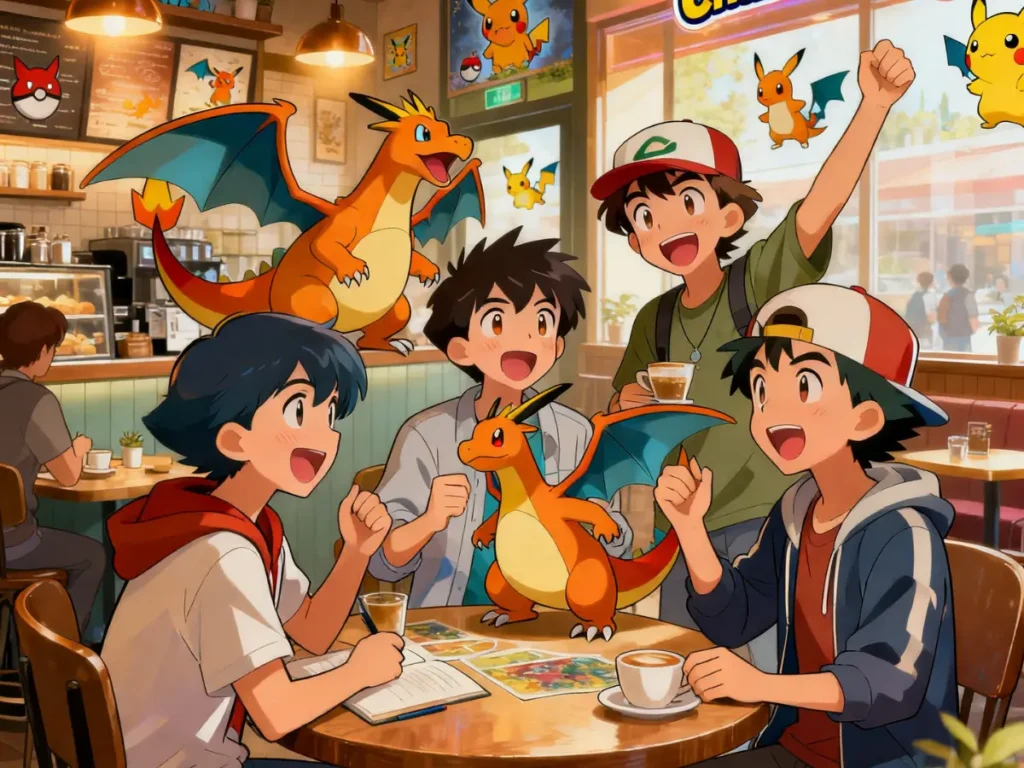
The origin story is perfectly internet. It all ties back to Charizard, one of the most iconic and powerful Pokémon from the original series and games. Known for its strength and fiery breath, Charizard is often depicted in poses of dominance. Online, particularly in meme communities, images and videos of Charizard unleashing its “Flamethrower” or “Fire Blast” attacks became a visual metaphor for someone “spitting fire” or “going off.” Over time, this evolved. The character’s name became a verb to describe the act of putting on a similarly impressive, hot, and overpowering display—not in battle, but in social life.
• The term sprouted from meme culture comparing flashy boasts to Charizard’s attacks.
• It originated from screenshots and GIFs of the Pokémon using its most dramatic moves.
• Online forums fused the character’s name with the universal concept of showing off.
• Its origin lies in the visual shorthand of a dragon unleashing its full power.
• The etymology connects a pop culture icon to a very human social behavior.
• It came from the need to describe a specific, over-the-top flavor of flexing.
• The word evolved because “flexing” alone didn’t capture the theatrical meme energy.
• Its history is tied to generations who grew up with Pokémon as a cultural touchstone.
• The origin is purely digital, born in comment sections and social media threads.
• It started as an inside joke among fans and then escaped into the wider lexicon.
• The term’s roots are in comparing a person’s energy to a fictional creature’s power.
• It came about because sometimes a picture of Charizard said it all.
Charizarding In A Text

In your direct messages or group chats, “Charizarding” is a quick, evocative label. It’s often used in response to a friend’s blatant brag. The tone is usually playful among friends but can carry a hint of gentle teasing. You might see it as a standalone comment—just “Charizarding.”—or as part of a longer, joke-filled exchange. It’s a way to acknowledge someone’s flex without taking it too seriously, perfectly suited for the informal, fast-paced world of texting.
• “Just bought the new console, no big deal.” → “Bro, stop Charizarding.”
• Send this to a friend who texts a mirror selfie in a brand new, expensive outfit.
• “Charizarding lol” is a perfect reply to a picture of a fancy meal on vacation.
• Use it when your friend nonchalantly drops their promotion news in the chat.
• It’s the one-word response to a screenshot of a perfect test score.
• Text it after someone shares a gym selfie highlighting major progress.
• “Okay, okay, we see you Charizarding!” works in a group thread.
• A simple “😤 Charizarding” caption under a friend’s boastful text says it all.
• Drop the term when someone’s humblebrag is painfully obvious to everyone.
• It fits when a text conversation suddenly becomes a showcase for one person.
• Use it to lovingly call out a friend who’s proudly sharing their new car pics.
• This slang wraps up a whole eye-roll and a smile in one word.
Charizarding Examples
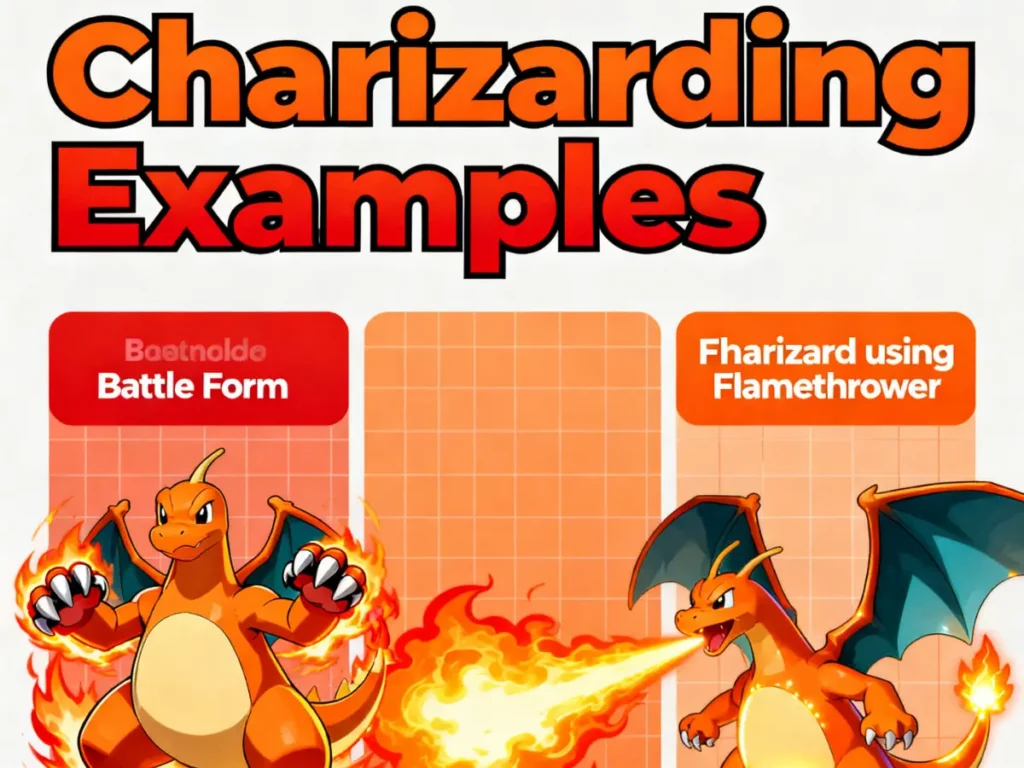
To really get it, you need to see it in action. Here are complete sentences showing how “Charizarding” fits into natural conversation, both as something you do and something you observe. These examples span different contexts, from social commentary to self-aware humor.
• My roommate has been Charizarding about his new gaming setup for three days straight.
• Did you see her post? Total Charizarding over those concert front-row tickets.
• I’m about to start Charizarding when my limited-edition sneakers arrive tomorrow.
• His entire Instagram story was just Charizarding his new car from every angle.
• There’s a fine line between sharing good news and full-on Charizarding.
• I felt like I was Charizarding when I showed everyone my custom-painted jacket.
• The comment section accused him of Charizarding after he posted his bonus.
• She’s Charizarding, but honestly, she worked hard for that degree so let her.
• My group chat is just us Charizarding about our various small victories.
• He tried to play it cool, but posting the beach sunset was low-key Charizarding.
• After I finished the marathon, my social media was pure, unapologetic Charizarding.
• The way he “casually” mentioned his salary was expert-level Charizarding.
Charizarding And Showing Off

This is the core synonym pair. While all Charizarding is showing off, not all showing off rises to the level of Charizarding. The key difference is scale and style. Showing off can be subtle. Charizarding implies a level of spectacle, a performative element that’s hard to miss. It’s showing off with the dial turned past ten, often with a self-aware or theatrical flair that references the meme culture it came from.
• Charizarding is a specific, meme-flavored subtype of showing off.
• All Charizarding is showing off, but not all showing off is Charizarding.
• Think of showing off as the category and Charizarding as the most fiery example.
• It’s showing off with the visual grammar of a dragon’s roar.
• This term implies the showing off is so overt it becomes a character moment.
• Charizarding takes showing off and adds a layer of intentional performance.
• If showing off is a boast, Charizarding is the boast with special effects.
• The nuance is in the drama—Charizarding is never accidental or low-key.
• It’s showing off in a way that demands a reaction, good or bad.
• This slang labels showing off that feels like a power move or finisher move.
• It frames showing off as an entertaining spectacle rather than just a brag.
• Charizarding turns the act of showing off into a recognizable cultural gesture.
Charizarding On Social Media

This is the term’s natural habitat. Platforms like Instagram, TikTok, and X (Twitter) are built for display, making them the perfect stage for Charizarding. It happens in boastful captions, hauls, “check out my view” vacation posts, and gym transformation videos. The term is often used in the comments by followers to playfully call out the poster’s flex. It’s the language of digital celebration and, sometimes, digital eye-rolling.
• Posting a 1-minute video just to show your new watch is peak Charizarding.
• That “gratitude” post listing five luxury items is Charizarding in disguise.
• Creating a whole TikTok trend around your new house is next-level Charizarding.
• It’s Charizarding when your caption downplays something obviously impressive.
• Posting your approval email for everyone to see is a classic Charizarding move.
• An Instagram carousel of just you with different awards is pure Charizarding.
• Using a viral sound to highlight your own achievement is savvy Charizarding.
• Charizarding thrives in the “outfit of the day” tag with designer labels.
• It’s the go-to comment when someone’s travel reel looks like a brochure.
• A Twitter thread detailing every step of your success story can be Charizarding.
• Tagging the brand in your post isn’t just sharing—it’s strategic Charizarding.
• Social media Charizarding turns personal milestones into public content.
Charizarding At Work Or School

Tread carefully here. The context matters immensely. Lighthearted Charizarding about landing a big client or acing an exam with close colleagues or classmates can build camaraderie. However, in formal settings or with wider audiences, it can easily be perceived as arrogance or insecurity. The key is knowing your audience and understanding that professional and academic environments often value humility alongside achievement.
• Charizarding in the team chat after a closed-won deal is often encouraged.
• Bringing your trophy to sit on your desk all month is workplace Charizarding.
• Mentioning your “perfect score” more than three times in class is Charizarding.
• It’s risky Charizarding to CC the whole company on a praise email from a client.
• A little Charizarding in your study group about your grade can be fun.
• Constantly talking about your workload can be a form of martyrdom Charizarding.
• Using every presentation to mention your past wins is professional Charizarding.
• Leaving your award plaque facing the door for visitors is subtle Charizarding.
• In school, Charizarding might be “accidentally” waving your test paper around.
• The line is crossed when your Charizarding makes peers feel less than.
• A quick, shared celebration is fine; a lengthy solo performance is not.
• Know the culture—some offices see Charizarding as confidence, others as conceit.
Charizarding In Gaming Culture

This is a meta-layer where the term feels most at home. Gamers use “Charizarding” to describe flexing in-game achievements: showing off rare loot drops, epic kill streaks, high-rank promotions, or maxed-out characters. It’s especially fitting because it directly references a gaming icon. Here, the flex is understood within the community’s language, making the term both descriptive and a nod to shared knowledge.
• Posting a clip of your “Pentakill” with a fire emoji is pure Charizarding.
• It’s gaming Charizarding to make your rare skin the focus of the lobby.
• Dropping your leaderboard rank into general chat is a classic Charizarding move.
• Equipping all your flashiest cosmetics at once is just visual Charizarding.
• “Finally got it!” posts with a picture of a 0.1% drop-rate item are Charizarding.
• Your victory pose after a win can be Charizarding if it’s extra dramatic.
• Streamers Charizard by highlighting their subscriber milestones with big alerts.
• In-game, standing on top of the defeated boss for photos is Charizarding.
• It’s a friendly taunt to say “stop Charizarding” when a teammate pops off.
• Showing your fully completed, perfect game save file is ultimate gaming Charizarding.
• This slang perfectly describes the moment you showcase your hard-earned digital status.
• Gaming culture gets it because the reference is baked into its own history.
Charizarding For Personal Wins

Sometimes, the flex is for you. Charizarding for your own personal wins is about self-recognition. It’s allowing yourself to feel powerful and proud of an accomplishment, big or small. This internal or semi-private celebration uses the energy of the term positively—you’re your own hype beast, acknowledging your effort and success without needing external validation as the primary goal.
• I’m Charizarding for myself today because I finally stuck to my morning routine.
• Do a little Charizarding in your journal when you overcome a personal fear.
• It’s healthy to Charizard internally when you handle a tough situation well.
• Buy yourself a treat and call it Charizarding for hitting a savings goal.
• Personal win Charizarding is about savoring your own progress and strength.
• You can Charizard alone in your car by blasting your pump-up song after a win.
• This means giving yourself permission to feel like a champion for a day.
• It’s a private moment of saying, “I did that,” with fiery self-pride.
• Charizarding for personal growth is the most rewarding kind of flex.
• Take a selfie for your own eyes only to capture that Charizarding feeling.
• It’s celebrating a milestone in a way that fuels your own confidence fire.
• Let yourself Charizard—you worked hard and deserve to feel powerful.
Charizarding For A Friend
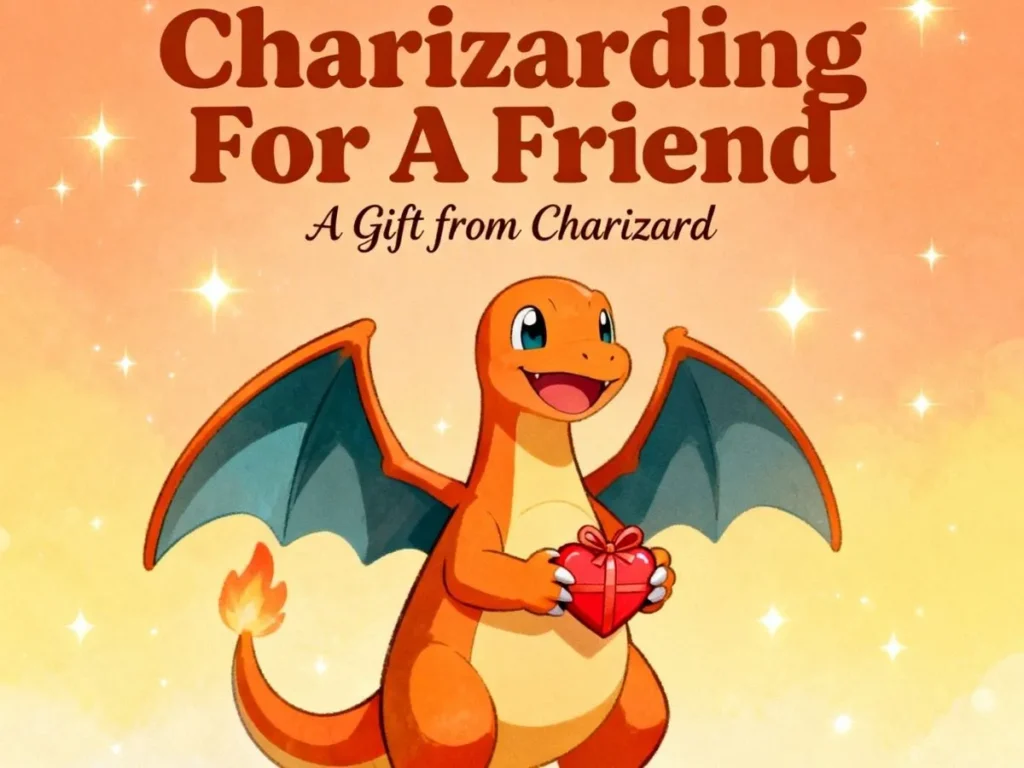
This flips the script. Instead of calling out a boast, you use the concept to hype someone else up. It’s about amplifying a friend’s achievement, celebrating their win as if it were your own, and doing so with that same energetic, fiery enthusiasm. You’re not accusing them of showing off; you’re actively encouraging them to show off because you’re proud of them.
• I’m going to be Charizarding for my bestie when she graduates next week.
• Your job is to Charizard for your friend when they’re too humble to do it.
• Comment “CHARIZARDING!!!” all over their big announcement post to hype them.
• Make a story post celebrating your friend’s win—that’s supportive Charizarding.
• “We are all Charizarding for Sarah today!” is a powerful, unifying caption.
• Buy the confetti and actively Charizard for your friend’s promotion.
• This means being someone’s personal hype squad, turned up to dragon levels.
• Tag them in memes that celebrate their success with fiery, funny GIFs.
• Publicly Charizarding for a friend shows genuine love and admiration.
• Throw them a small party and declare it a “No-Humble Zone—Charizard Only.”
• Your supportive Charizarding can give them the confidence to own their moment.
• Be the friend who fans the flames of celebration, not the one who douses them.
When Charizarding Goes Too Far
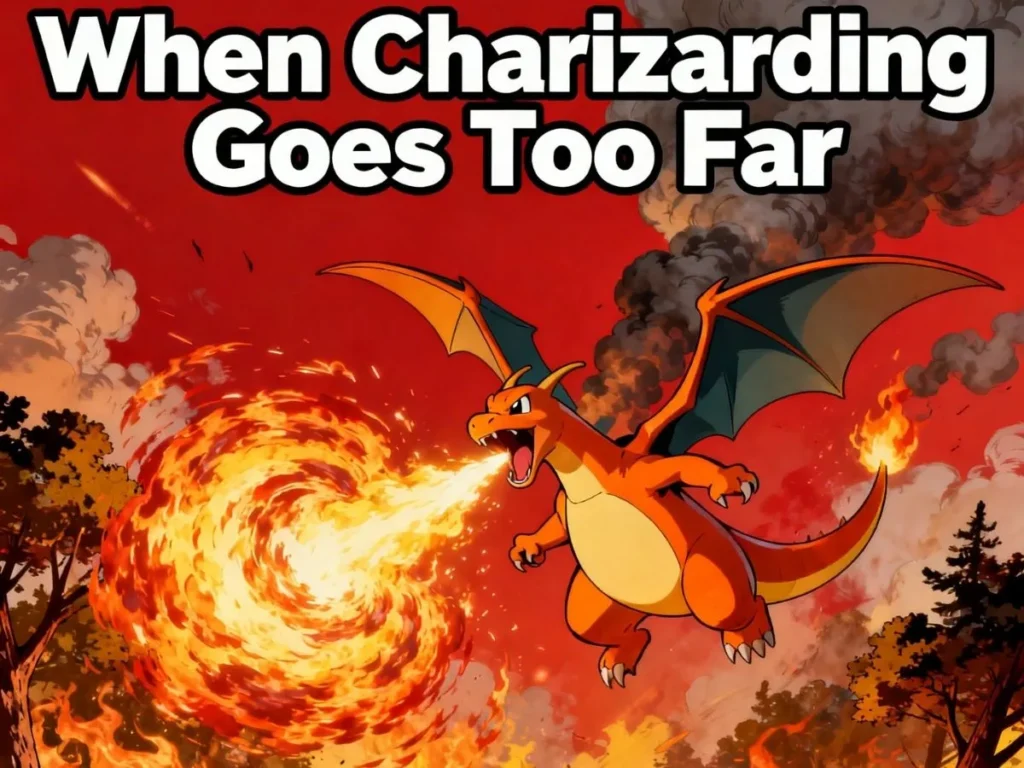
The fire can burn. Charizarding becomes problematic when it shifts from celebratory to obnoxious, from confident to insecure, or from occasional to constant. It’s the point where the flex stops being fun or impressive and starts alienating the audience. Recognizing this line is crucial for maintaining positive social connections, both online and off.
• It’s gone too far when your boasts become the only thing you talk about.
• Charizarding crosses a line when it’s used to belittle others’ achievements.
• If your flexes feel like pleas for validation rather than shares of joy, pause.
• You’ve lost the plot when people start muting or hiding your posts.
• It’s too much when your Charizarding lacks self-awareness or context.
• Using other people’s struggles as a backdrop for your boast is toxic Charizarding.
• When the humor is gone and only arrogance remains, you’ve overdone it.
• If your friends have stopped engaging with your wins, it might be a sign.
• Charizarding becomes insufferable when it’s inauthentic or purely for status.
• The fire is out of control if every interaction becomes a performance.
• It’s too far when your celebration dims the light on others.
• True confidence doesn’t need constant, over-the-top Charizarding to feel real.
How To Respond To Charizarding
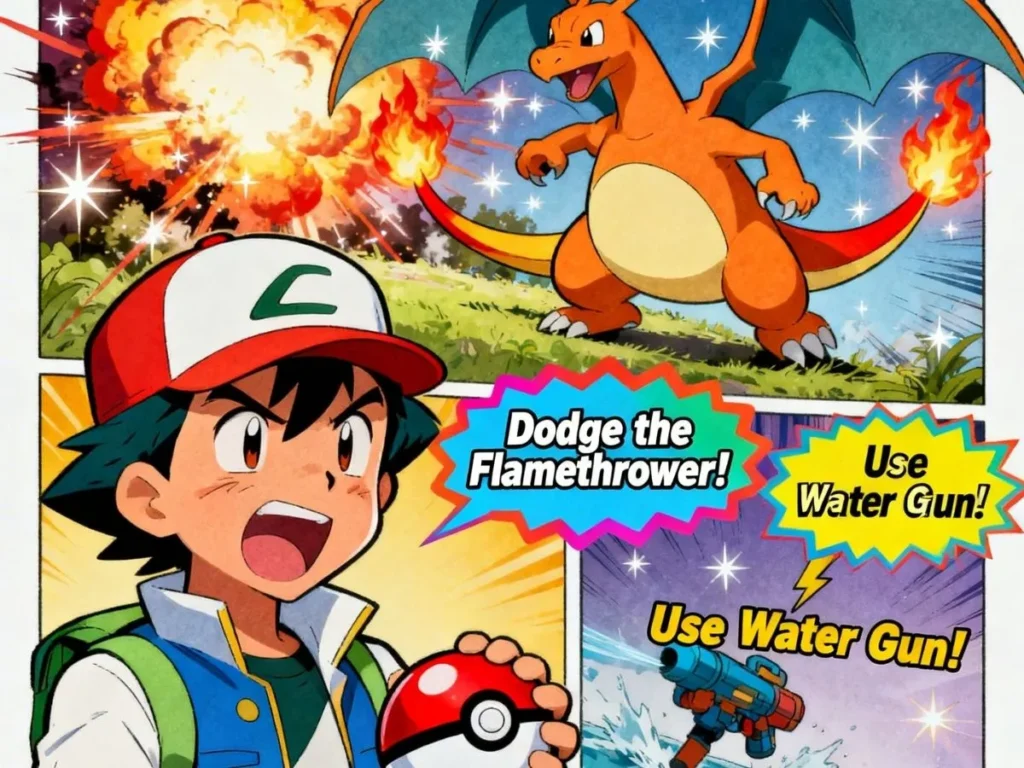
What do you say when someone is unleashing their fire blast? Your response can range from playing along to gentle ribbing. The best reactions match the relationship and the tone of the original flex. With friends, it’s often part of the game. With acquaintances, a simple acknowledgment might suffice.
• “Okay, Charizard! We see you!” is a classic, playful acknowledgment.
• Respond with a GIF of Charizard nodding approvingly or breathing fire.
• “Save some flex for the rest of us!” keeps it light and funny.
• A simple “🔥🔥🔥” in the comments speaks the same language.
• “Man’s out here Charizarding again, I respect it.”
• “Absolute Charizard behavior. Congrats!”
• For a close friend, “Love this for you! Charizard away!”
• An eyeroll emoji followed by a heart can show affectionate teasing.
• “Peak performance. Never stop Charizarding.”
• Sometimes, just liking the post is the perfect, low-effort response.
• “Tell me you’re winning without telling me you’re winning.” with a laugh.
• Your response can either fuel their fire or gently remind them to share the air.
Synonyms For Charizarding
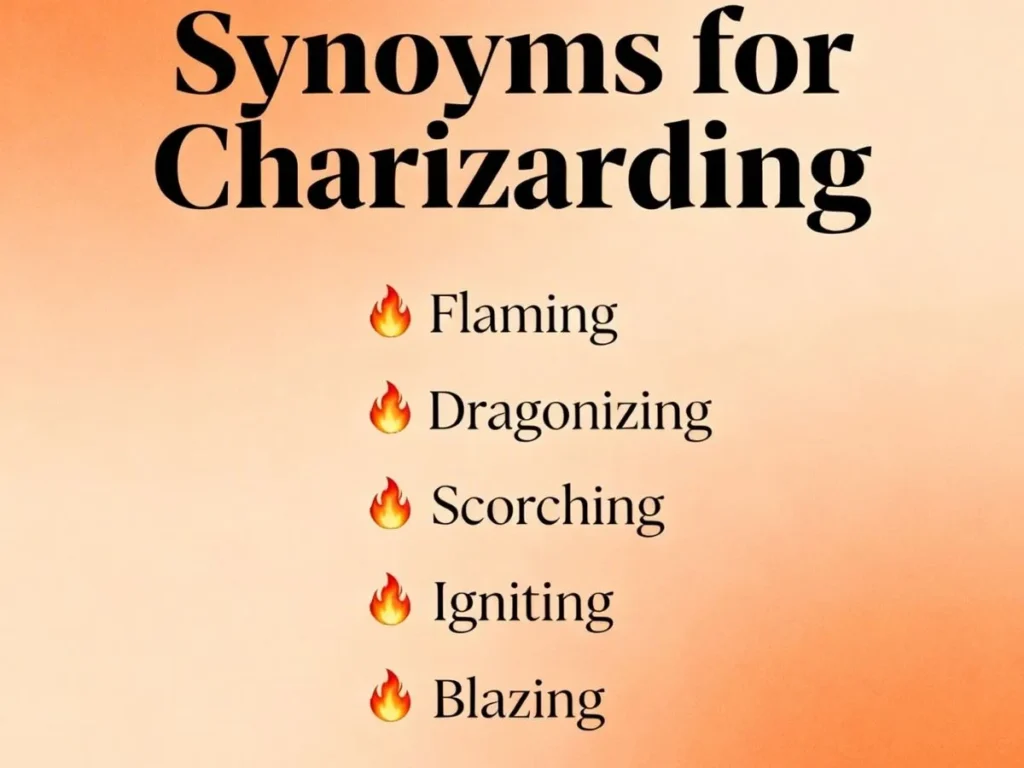
While “Charizarding” has its unique flair, it lives in a family of slang terms for showing off. Knowing the synonyms helps you understand the subtle shades of meaning. “Flexing” is the direct parent. “Main character energy” can overlap when it’s boastful. “Showboating” or “grandstanding” are older terms with similar vibes. “Peacocking” focuses on visual display.
• Flexing: The most direct synonym, focusing on displaying strength or success.
• Main character energy: When someone’s boasting frames them as the star of a movie.
• Showboating: Emphasizes performing and drawing attention through action.
• Grandstanding: Doing something for public applause, often with a selfish motive.
• Peacocking: Showing off visually, like flashy clothes or accessories.
• Boasting: The traditional, straightforward term for talking with excessive pride.
• Flossing: An older slang term for showing off wealth or style.
• Clout chasing: When the show-off is specifically for social media fame/attention.
• Humblebragging: A subtler, often more irritating form of disguised Charizarding.
• Spazzing: In some contexts, means going off or showing out excitedly.
• Glazing: (Modern slang) Excessive, over-the-top praise that can be self-directed.
• Doing the most: Performing extra, unnecessary actions for attention or effect.
The Fine Line: Confidence Vs. Charizarding

This is the philosophical heart of the term. Confidence is quiet assurance; Charizarding is loud proclamation. Confidence doesn’t need an audience; Charizarding is inherently performative. The line is drawn by intent, frequency, and self-awareness. You can be confident and share a win without Charizarding. Charizarding often uses confidence as its fuel but expresses it as a spectacle.
• Confidence is knowing you’re great; Charizarding is needing everyone else to know.
• You can share good news from a place of confidence without Charizarding.
• Charizarding often uses external validation to prop up internal feelings.
• True confidence might inspire others, while excessive Charizarding can annoy them.
• The line is crossed when sharing becomes performing.
• Confidence is a state of being; Charizarding is an act of demonstration.
• If you’d do the thing even if no one saw it, that’s confidence, not Charizarding.
• Charizarding can be a playful expression of confidence among friends.
• The intent matters: Is this for shared joy, or for a spotlight?
• Confidence is secure; Charizarding can sometimes signal insecurity.
• Owning your success is confidence; staging a parade for it is Charizarding.
• The healthiest place is to be confident enough that you don’t need to constantly Charizard.
Why This Slang Stuck

Language evolves to fill needs. “Charizarding” stuck because it perfectly packaged a complex social observation into a single, vivid, and culturally relevant word. It’s more specific than “flexing” and instantly creates a humorous visual. It connects generations through a shared pop-culture reference while describing a very modern, digital behavior. It’s fun to say, easy to understand once explained, and incredibly useful for navigating online social dynamics.
• It stuck because a GIF of Charizard explains the feeling faster than paragraphs.
• The term filled a gap for a specific, meme-aware kind of boasting.
• It resonated with a generation that communicates in pop culture references.
• The visual metaphor is simply too strong and too funny to ignore.
• It stuck due to its versatility—it can be a verb, a label, or a joke.
• Slang thrives on shared understanding, and the Pokémon link created that instantly.
• It describes a universal behavior with a fresh, non-judgmental-sounding word.
• The term stuck because it turns social observation into a playful in-group signal.
• Its staying power comes from being useful in both admiration and teasing.
• It captured the over-the-top, performative nature of online culture perfectly.
• The word itself just sounds energetic and funny, which helps it spread.
• Ultimately, it stuck because it makes talking about human behavior more creative.
FAQs
What is the meaning of Charizarding in slang?
In modern slang, “Charizarding” means to show off or flex in a very conspicuous, dramatic, and attention-grabbing way. The term is inspired by the powerful Pokémon Charizard and its fiery, impressive attacks, comparing someone’s boasting to the creature’s display of power.
How do you use Charizarding in a text?
You use it as a verb to describe someone’s boastful behavior. For example, if a friend texts a picture of their new expensive purchase, you might reply, “Okay, stop Charizarding!” It’s often used in a playful, teasing manner among friends to acknowledge their obvious, over-the-top flex.
Where does the term Charizarding come from?
It originates from Pokémon and online meme culture. Images and videos of Charizard using its powerful “Flamethrower” or “Fire Blast” moves became a metaphor for someone “going off” or putting on a flashy display. This visual comparison evolved into using “Charizarding” as a verb for showboating.
Is Charizarding a good thing?
It depends entirely on context and tone. Among friends, it can be a fun, mutual way to celebrate wins with playful exaggeration. However, if done excessively or without self-awareness, it can be perceived as arrogant, obnoxious, or insecure. The line is thin.
What is another word for Charizarding?
The most direct synonym is “flexing.” Other related terms include “showboating,” “grandstanding,” “peacocking,” or having “main character energy.” Each has a slightly different nuance, but all revolve around the core idea of conspicuous showing off.
Conclusion
Navigating the world of modern slang can feel like decoding a new language. Understanding the meaning of Charizarding gives you a key to a whole layer of digital communication, from playful hype to gentle ribbing. It’s more than just a Pokémon meme; it’s a lens on how we celebrate and perform in the age of social media. Use this knowledge wisely, hype up your friends, and maybe do a little Charizarding of your own—just remember to keep the fire under control.

Tyler Brooks is an American lifestyle writer known for creating family-centered wishes, milestone messages, and supportive greetings. With a strong background in parenting content and emotional wellness writing, Tyler brings clarity, warmth, and genuine care to every message. His work helps readers express feelings with ease—whether celebrating, comforting, or uplifting loved ones.